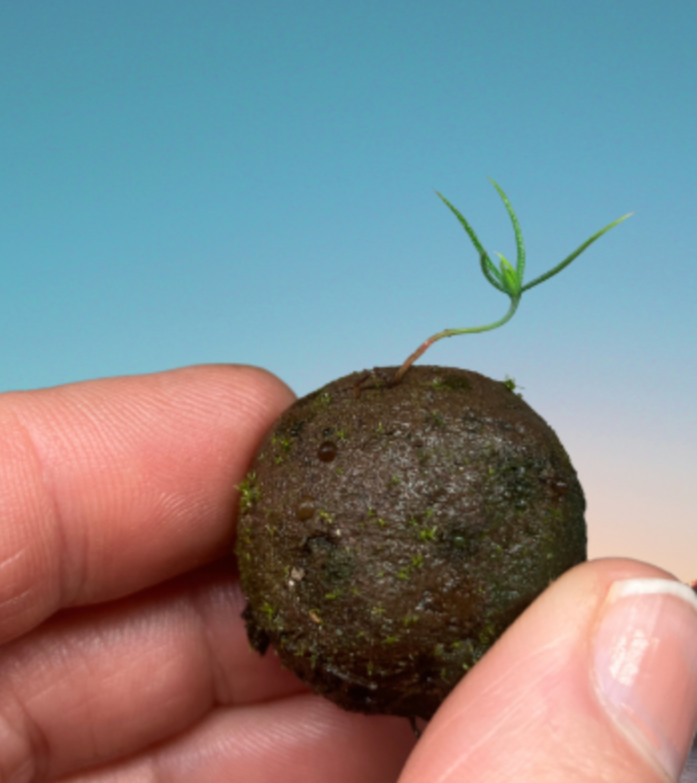
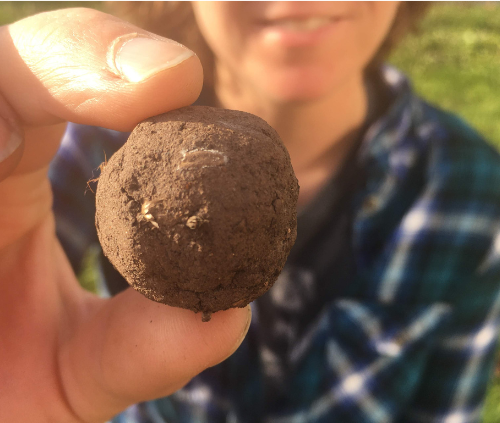
The power and scope of a seed bomb pictured in the palm of the owners hand.

Designed to Build Ecosystems from the Palm of Your Hand

Collections

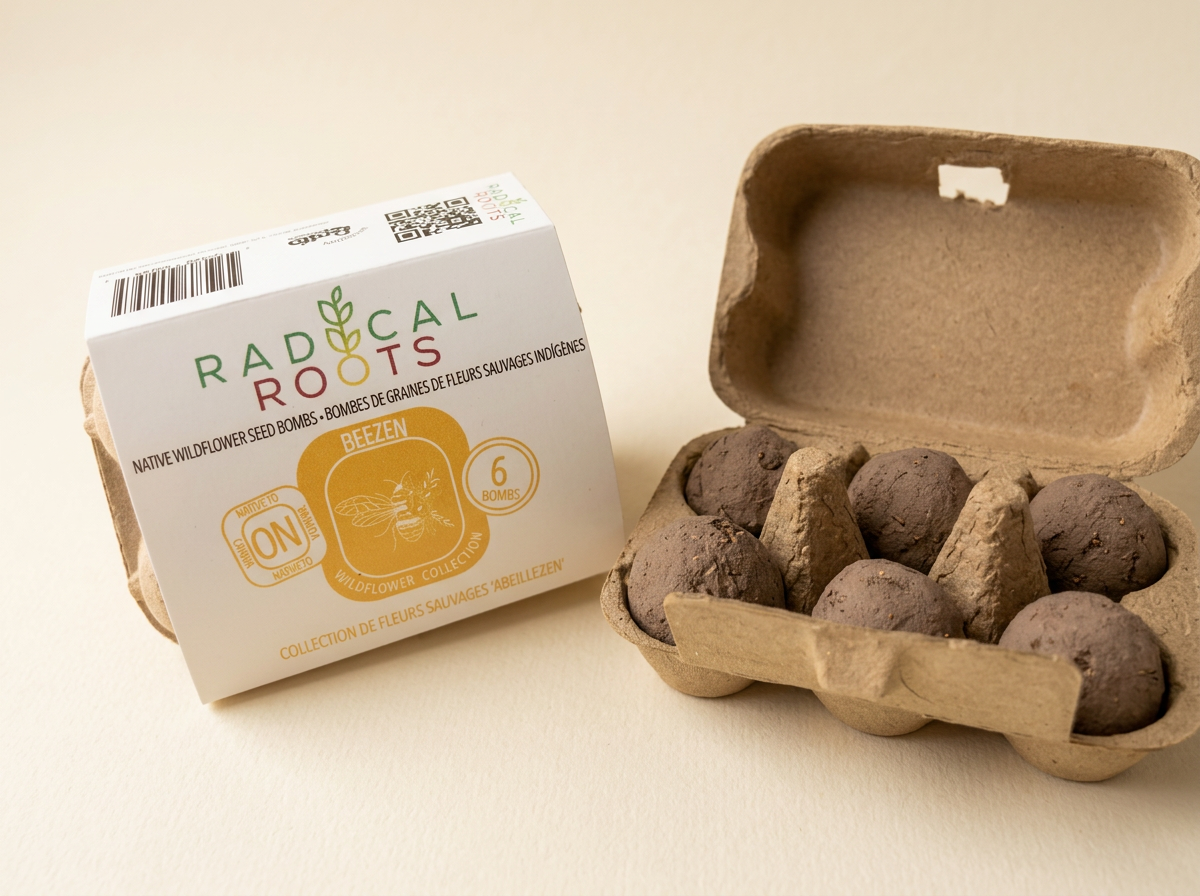
Bee Zen - Ontario Native
$14.00

Native Wildflower Seed Bombs

What they are

  • Small, hand-formed balls made from a mix of native wildflower seeds, clay, and compost.

  • Designed for easy, no-dig planting: simply toss, press, or place them on bare soil.

Typical contents and seed mix

  • A regionally appropriate blend of perennial native species chosen for compatibility with local climate and soils.

  • Seed mix: Wild Lupines, Butterfly Milkweed, Lance Leaf Coreopsis, New England Aster, Wild Bergamot, Evening primrose, Blanketflower, Purple Coneflower

  • Seeds are mixed with organic compost (nutrients and moisture retention) and natural clay (protects seeds, holds shape).

How to use

  1. Choose a location with suitable light and soil conditions for the included species (sun, part-sun, or shade as specified).

  2. Clear competing vegetation and expose bare soil for best contact.

  3. Toss or place seed bombs onto the soil surface, spacing them according to package guidance.

  4. Lightly press them into the soil or cover with a thin layer of loose soil or mulch to improve seed-soil contact.

  5. Water lightly if the soil is dry, especially during the first few weeks. After germination, reduce supplemental watering to encourage deep root development.

  6. Monitor for seedlings, thin if necessary, and allow plants to establish.

Best times to plant

  • Early spring after danger of hard frost has passed, or late fall before the ground freezes (seasonal timing depends on local climate).

  • Plant in Fall for natural stratification to take place.

Benefits and expected outcomes

  • Year 1: Many perennials may form foliage and bloom late summer or the following year.

  • Year 2 and beyond: Perennials and native grasses become established, increasing bloom duration and habitat value.

  • Increased presence of pollinators, improved backyard wildlife habitat, and a more resilient, lower-maintenance landscape.

Site considerations and tips

  • Use seed bombs in areas free of invasive species pressure; avoid seeding into dense turf without first creating openings.

  • Do not use in sensitive natural areas or protected wildlands where introducing any seed—even native—could alter existing plant community dynamics without local guidance.

  • Match the seed mix to your ecoregion for best results; region-specific mixes improve establishment and ecological fit.

  • Consider planting in clusters rather than scattering singly; clumps attract pollinators more effectively.

Quick checklist before you toss

  • Is the mix specified for your region/zone?

  • Is the site free of dense turf or invasive plants?

  • Is timing appropriate (spring or fall)?

  • Do you have a plan for initial watering if dry?

Native wildflower seed bombs are a simple, tactile way to restore habitat, support pollinators, and bring seasonal color to suitable sites. When chosen and used responsibly, they can be an effective tool for increasing native plant cover and ecological value in urban, suburban, and garden settings.

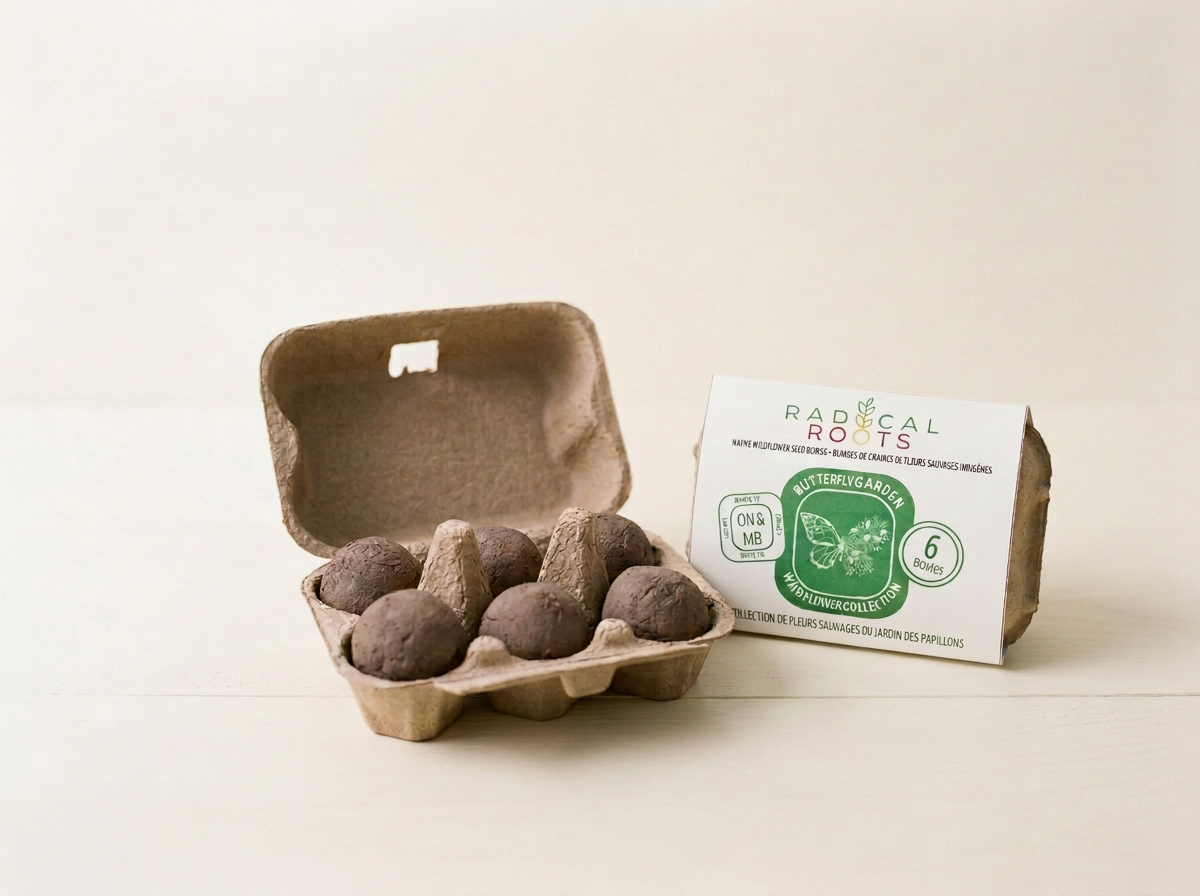
Butterfly Garden Native Wildflower Seed Bombs
$14.00

Butterfly Garden Seed Bombs — Ontario & Quebec Mix

A regionally tailored seed-bomb mix for Ontario and Quebec, selected to attract and support native butterflies, provide nectar through the flight season, and offer larval host plants where appropriate. These seed bombs are best used in sunny to partly sunny locations, along garden edges, meadows, roadside plantings, or restoration patches. Pack contents and planting notes are optimized for the local climate and pollinator communities.

Included species (description, benefits, and planting notes)

  • Blue Vervain (Verbena hastata)

    • Description: Upright, native perennial with tall spires of purple-blue flowers from mid to late summer.

    • Benefits: High-value nectar source for many butterfly species, bees, and other pollinators; good for late-season foraging.

    • Planting notes: Prefers full sun to part shade and moist to average soils; tolerates occasional wet spots.

  • Purple Prairie Clover (Dalea purpurea)

    • Description: Compact, clover-like heads of purple flowers on fine stems; a prairie native perennial.

    • Benefits: Nectar-rich for butterflies and bees; fixes nitrogen, improving soil fertility.

    • Planting notes: Thrives in full sun and well-drained soils; drought-tolerant once established.

  • Common Milkweed (Asclepias syriaca)

    • Description: Tall perennial with clusters of scented pink to mauve flowers and characteristic seed pods; principal host for monarch caterpillars.

    • Benefits: Essential larval host for monarch butterflies and nectar source for many species; supports a wide range of pollinators.

    • Planting notes: Prefers full sun and well-drained to slightly sandy soils; can spread by rhizomes—use in dedicated patches or meadow areas.

  • Lavender Hyssop (Agastache foeniculum)

    • Description: Aromatic perennial with spikes of lavender to purple flowers and fragrant foliage.

    • Benefits: Strong nectar producer attractive to butterflies, hummingbirds, and bees; blooms midsummer into fall.

    • Planting notes: Prefers full sun and well-drained soils; tolerates dry conditions.

  • Canada (Showy) Tick Trefoil (Desmodium canadense)

    • Description: Open, branching perennial with pinkish-lavender pea-like flowers that persist into late summer.

    • Benefits: Nectar source for butterflies and native bees; seeds are a wildlife food source.

    • Planting notes: Grows well in full sun to light shade; prefers well-drained soils but tolerates a range of conditions.

  • Square-stemmed Monkeyflower (Mimulus ringens)

    • Description: Upright perennial with tubular purple flowers often found near moist habitats.

    • Benefits: Nectar for butterflies and bees; useful in wet edges, rain gardens, and along streams.

    • Planting notes: Prefers moist to wet soils and full sun to part shade; plant in low spots or beside water features.

  • Little Bluestem (Schizachyrium scoparium)

    • Description: Warm-season native bunchgrass with fine blue-green foliage turning coppery in fall.

    • Benefits: Provides overwintering structure and shelter for insects; supports habitat diversity in meadow plantings.

    • Planting notes: Prefers full sun and well-drained soils; drought-tolerant and low-maintenance.

Seed-Bomb Use & Planting Guidelines

  • Timing: Best deployed in spring after last frost or in fall before ground freezes. Spring placement encourages germination; fall placement allows natural cold stratification for some species.

  • Placement: Choose sunny to partly sunny sites; avoid deeply shaded forest understories. Use in native meadows, pollinator strips, roadside verges, buffer zones, and garden edges.

  • Soil prep: Minimal disturbance is preferred. Lightly scrape or loosen the soil surface where you’ll place bombs to improve seed-to-soil contact.

  • Rain & watering: After placement, ensure seed bombs receive natural rainfall or water lightly for the first few weeks if conditions are dry. Avoid overwatering.

  • Spacing & density: Scatter seed bombs thinly across the area—dense clusters of aggressive species (notably common milkweed) should be avoided in small garden beds. Aim for a natural, meadow-like distribution.

  • Maintenance: Allow plants to flower and set seed; avoid mowing or cutting until late fall or early spring to preserve overwintering insects and stem structure. Control invasive weeds by targeted removal to reduce competition.

  • Notes on milkweed: Common milkweed is an important monarch host but can spread via rhizomes. If using in small garden beds, confine to a designated patch or container planting.

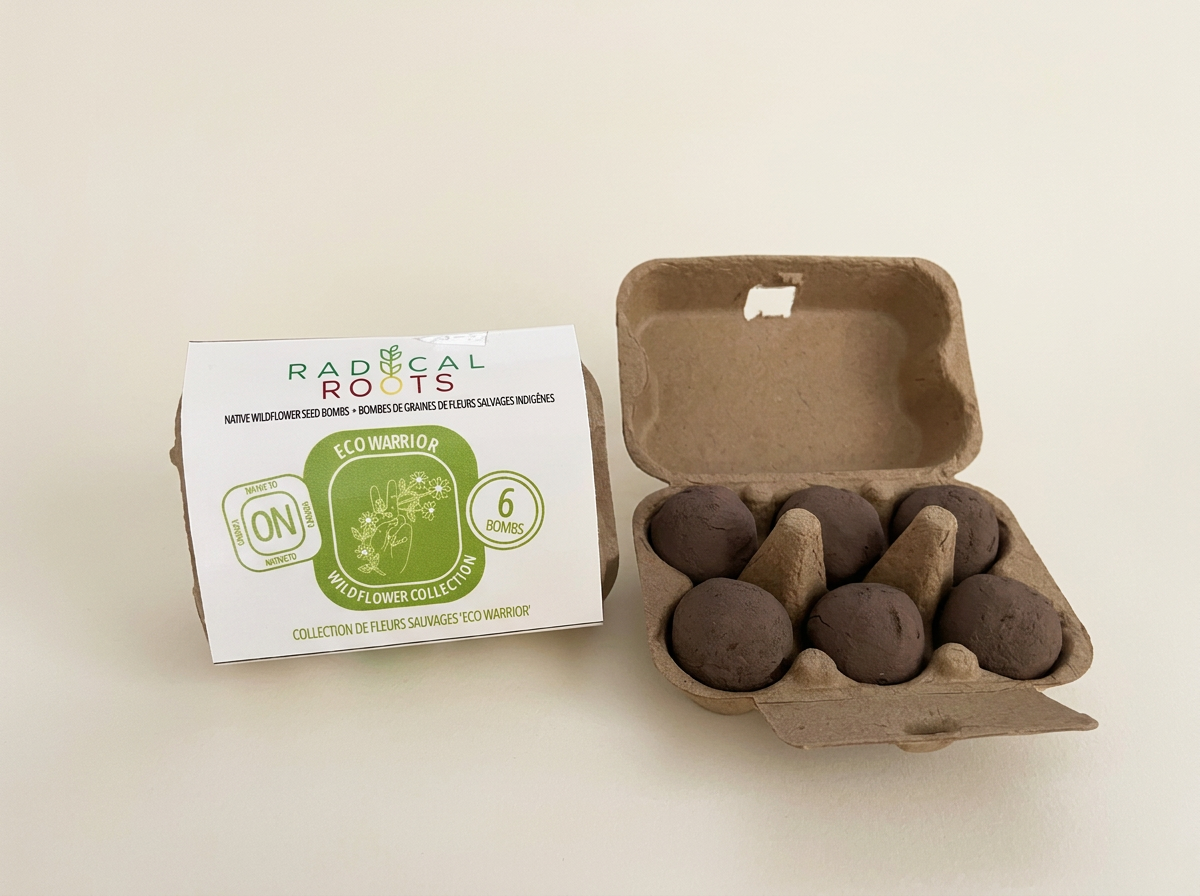
Eco Warrior Native Wildflower Seed Bombs
$14.00

Eco Warrior — All‑in‑One Native Seed Mix

Bring a riot of color, life, and ecological benefit to your yard with Eco Warrior, an all‑in‑one wildflower seed mix formulated from native Ontario and Quebec species. This thoughtfully balanced blend offers season‑long blooms, structural diversity, and rich nectar and pollen resources to attract and support bees, butterflies, and hummingbirds.

Why Eco Warrior?

  • Native species: Every plant in the mix is native to Ontario and Quebec, adapted to local soils and climate for reliable performance and ecological compatibility.

  • Pollinator magnet: High‑nectar and high‑pollen blooms chosen to feed a wide range of pollinators across the season — including solitary bees, honeybees, bumblebees, native butterflies, and ruby‑throated hummingbirds.

  • Diverse structure: Combines early, mid, and late‑season flowering perennials and annuals, plus a mix of heights and textures to create nesting and resting habitat for insects and shelter for small wildlife.

  • Low maintenance: Once established, these natives need minimal watering and upkeep; they tolerate local conditions and promote resilient, low‑input landscapes.

  • Meadow aesthetic: Delivers a natural meadow look—vivid colors, swaying stems, and layers of foliage—ideal for pollinator gardens, restoration patches, roadside buffers, and biodiverse borders.

Typical species included (Representative examples; exact composition may vary by seed batch)

  • Early bloomers: Wild columbine, prairie phlox

  • Mid‑season powerhouses: Monarda (bee balm), goldenrod, black‑eyed Susan

  • Late bloomers: New England aster, slender blazing star

  • Support plants: Native milkweeds for monarchs, native legumes to enrich soil, and native grasses for structure and habitat

Planting & Care

  • Site: Full sun to partial shade. Tolerates a range of poor soils but performs best in well‑drained sites.

  • Preparation: Clear competing vegetation and loosen topsoil.

  • Seeding: Broadcast evenly in spring after frost or in fall for natural stratification. Lightly press seeds into the soil; do not bury deeply.

  • Establishment: Keep soil surface lightly moist until seedlings are established (4–8 weeks). After the first season, water only during extended dry spells.

  • Management: Mow or cut back in late winter/early spring to encourage new growth. Allow some seed heads to remain for winter habitat and seed regeneration.

Benefits

  • Supports biodiversity by providing nectar, pollen, larval host plants, and shelter.

  • Encourages beneficial insects that aid pollination and natural pest control.

  • Reduces the need for fertilizers, pesticides, and frequent watering versus turf lawns.

  • Enhances soil health and helps stabilize erosion-prone sites.

Specs

  • Region: Native to Ontario & Quebec

  • Coverage: One carton covers approximately 6 sq ft

  • Bloom period: Early spring through late fall (varies with species and local conditions)

  • Maintenance level: Low after establishment

Bring back the buzz. Eco Warrior turns ordinary green space into a living support system for pollinators with a resilient, season‑long display of native blooms. Ideal for gardeners, restoration projects, and anyone who wants high impact for low maintenance.

A hand holding a small, round soil seed with a tiny green sprout emerging from it against a blurred blue background.

Lets talk Ecological Restoration

From small community initiatives to large-scale ecological restoration projects, Radical Roots partners with municipalities, conservation organizations, Indigenous communities, businesses, and landowners to restore native ecosystems through science-based, regionally appropriate restoration solutions. Tell us about your project, and we’ll help determine the best path forward.

Our philosophy is to Nurture Nature, meaning we simply add to the ecosystem and let nature work its magic.

Used as a restoration tool, able to build ecosystems, combat invasive species and regrow forest after wildfire.

Learn More

Customize Your Bombs

Custom Packaging

Full service packing for customer/employee appreciation, party favours, wedding favours, community engagement and plant for a cause customization. We offer the carton customization or a heat pressed drawstring bag in various sizes.


Custom Seed Mixes

Whether youre looking for a single species or a custom hard to find wildflower, grass or tree seed mix. Custom ecosystems or to kick out any troublesome non-native plants, reach out directly and we’ll be able to find a solution.


Large Order Capacity

We have large capacity for large custom or large order types, we can produce white label, wholesale and over 1 million seed bombs made under our belt. Reach out for any and all needs